
Teen Patti Master Rules: Complete Guide for Beginners (2026)
Meta description: Learn Teen Patti Master rules step by step hand rankings, blind vs. seen play, sideshows, and beginner tips to play this classic card game with confidence.
Teen Patti, also known as “Three Cards,” is one of the most popular card games around, blending simple mechanics with real strategy and bluffing. Teen Patti Master has become a go-to app for playing it online, offering fast tables, clean gameplay, and a modern take on the traditional game. Whether you’re picking it up for the first time or brushing up before your next session, this guide covers everything you need to know: setup, hand rankings, betting rounds, special moves, and tips for beginners.
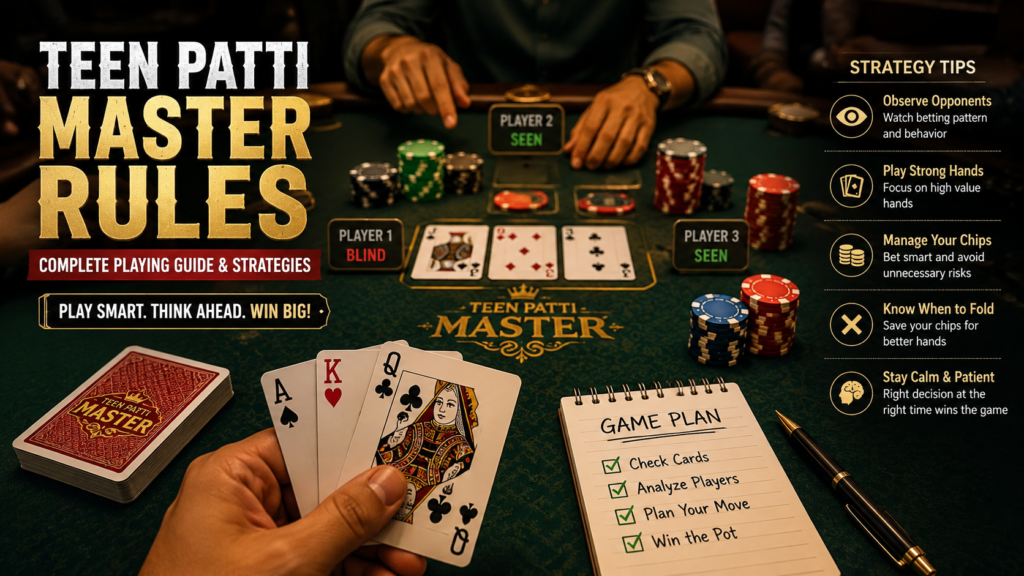
What Is Teen Patti Master?
Teen Patti Master is a mobile card game app that brings the classic three-card game to your phone, often alongside variations like Rummy, Slots, Ludo, and Bingo. It’s designed for both casual players learning the ropes and experienced players looking for fast-paced tables. The app typically includes features like private tables with friends, daily bonuses, loyalty rewards, and in-game chat so players can interact while they play.
Like most apps in this category, Teen Patti Master is intended strictly for users 18 and older, and many versions include real-cash tables. That means it’s worth understanding both the rules and the responsible-play basics before diving in this guide covers both.
How Many Players and Cards Are Used?
- Played with a standard 52-card deck
- Best suited for 3 to 6 players per table
- Each player is dealt 3 cards, face-down, before betting begins
Because only three cards are in play, rounds move quickly compared to other card games which is part of what makes Teen Patti so popular for casual, social play as well as competitive tables.
Understanding the Boot: How a Round Starts
Every round begins with the boot a small, fixed amount that each player contributes to the pot before any cards are dealt. This ensures there’s always something to play for right from the start, even before betting begins.
Once the boot is placed, the dealer distributes three cards to each player. Betting then begins with the player seated to the dealer’s left and continues clockwise around the table, round after round, until the hand is resolved.
Blind vs. Seen Play: The Core Teen Patti Rule
One of the first concepts every beginner needs to understand is the difference between playing blind and playing seen. This single rule shapes almost every strategic decision in the game.
- Blind player: Bets without looking at their own cards. Blind bets are smaller than seen bets, and playing blind is a common bluffing tool since opponents have no way of knowing whether you’re holding a strong hand or a weak one.
- Seen player: Looks at their cards before betting. Seen players must bet at least double the current blind stake, since they now hold more information than blind players at the table.
You can switch from blind to seen at any point during your own turn. However, this only works one way once you’ve looked at your cards and become a seen player, you cannot switch back to playing blind for that round.
This blind/seen dynamic is what gives Teen Patti its poker-like bluffing element: a confident blind bet can pressure seen players into folding strong hands, while a cautious seen player might fold rather than risk more chips against an unknown blind hand.
Teen Patti Hand Rankings (Highest to Lowest)
Knowing the hand rankings is essential to playing and winning Teen Patti Master. Here’s the full order from strongest to weakest:
- Trail / Trio (Three of a Kind) Three cards of the same rank, such as three Kings. Three Aces is the highest possible trail in the game.
- Pure Sequence (Straight Flush) Three consecutive cards, all of the same suit, such as 4-5-6 of hearts.
- Sequence (Straight/Run) Three consecutive cards of mixed suits, such as 7-8-9 across different suits.
- Color (Flush) Three cards of the same suit, not in numerical sequence.
- Pair Two cards of matching rank plus one unrelated card.
- High Card No matching combination of any kind; the hand is judged by its highest individual card.
If two players end up with hands of exactly equal value at showdown, the pot is typically split evenly between them rather than awarded entirely to one side.
Understanding this hierarchy isn’t just useful for judging your own hand it also helps you estimate the odds that an opponent is bluffing based on how confidently they’re betting.
Betting Rounds: Call, Raise, or Fold
After cards are dealt, betting moves clockwise around the table, with each player acting in turn. On each turn, a player has three options:
- Bet/Call Match the current stake to remain in the round and keep your hand alive.
- Raise Increase the stake beyond the current bet, applying pressure on the players still in the hand.
- Fold Give up the hand entirely, forfeiting any chance at winning the pot but also avoiding further losses.
Betting continues around the table until one of two things happens: either only one player remains (in which case they win the pot automatically, without needing to reveal their cards), or the remaining players agree to a showdown.
Because bets increase relative to whether you’re blind or seen, the pot can grow quickly, which is part of what keeps rounds exciting even with a small starting boot.
What Is a Sideshow?
A sideshow is a special move available only between two consecutive seen players sitting next to each other in turn order. One seen player can request to privately compare hands with the seen player who acted immediately before them. Whoever has the weaker hand between the two must fold, while the stronger hand continues playing against the rest of the table.
A few important details about sideshows:
- Sideshows are not available to blind players; only two seen players can use this move.
- The player being asked for a sideshow can choose to accept or decline the request.
- If the sideshow is declined, the game simply continues with normal betting.
Sideshows are a useful strategic tool for eliminating a single competitor without triggering a full table showdown, especially when you suspect a specific opponent is weaker than the others still in the hand.
What Happens at Showdown?
A showdown happens when the remaining players agree to reveal their cards to determine the winner of the pot. The rules around calling a showdown depend on whether the players involved are blind or seen:
- A blind player can call for a showdown at any time during their turn.
- If a seen player is involved, both players must mutually agree before cards are revealed.
- If one player wants a showdown and the other refuses, betting simply continues instead of forcing a reveal.
Once cards are revealed, the hand rankings determine the winner, and that player collects the entire pot unless it’s a tie, in which case the pot is split.
Beginner Tips for Teen Patti Master
Here are a few practical tips to help new players get comfortable at the table:
- Start with small stakes while you’re still learning how betting patterns and pacing work on a given table.
- Playing blind saves money early on, since blind bets are smaller, but it also gives you zero information about your own hand, so save aggressive blind bets for situations where you’re comfortable bluffing.
- Watch opponents’ betting behavior, not just your own cards. A sudden raise from a previously cautious player can be a signal worth paying attention to, and reading the table is just as important as reading your hand.
- Use sideshows strategically to eliminate a specific competitor you suspect is weak, rather than dragging the whole table into a showdown.
- Don’t over-commit to a weak hand just because you’ve already put chips into the pot folding early is often the better long-term play.
- Set a time and money budget before you start playing, and stick to it regardless of how a session is going.
Is Teen Patti Master Safe to Play?
Teen Patti Master and similar apps are intended strictly for users 18 and older, and real-money features are subject to local laws, which can vary significantly depending on where you live. Before using any real-cash features, it’s worth reviewing the app’s official terms, requested permissions, and payment policies directly through official channels.
A few general safety reminders worth keeping in mind:
- Treat the game as entertainment rather than a source of income.
- Avoid chasing losses by increasing bets out of frustration.
- Never share sensitive information like OTPs, PINs, or passwords legitimate apps will never ask for these through chat or support requests.
- Set firm limits on both time and money before each session, and walk away once you hit them.
Frequently Asked Questions
What is the objective of Teen Patti? The goal is to have the best three-card hand at showdown or to get all other players to fold so you win the pot outright without needing to reveal your cards.
What’s the difference between blind and seen players? Blind players bet without looking at their cards and pay a smaller stake; seen players look at their cards first but must bet at least double the current blind amount.
Can I switch between blind and seen during a round? Yes, you can move from blind to seen at any point during your turn, but you can’t switch back to blind once you’ve already seen your cards.
What is the highest-ranking hand in Teen Patti? A trail, or three of a kind, with three Aces being the highest possible hand in the game.
What happens if two players tie at showdown? The pot is usually split evenly between the tied players rather than awarded to just one.
What is a sideshow, and when can I use one? A sideshow is a private comparison between two consecutive seen players; the weaker hand must fold. It’s only available between seen players and can be declined by the player who’s asked.
This guide covers standard Teen Patti rules as commonly used across Teen Patti Master and similar apps. Always check the specific app’s in-game rules, as minor variations can exist between platforms.
Pingback: What Is Teen Patti Master? Complete Guide, Features & How to Play